

It’s 1912. The British Empire is at its peak, but its scientists are jealous. Germany has the Heidelberg Man. France has the Cro-Magnon. Britain? We have nothing but rain and Roman coins.
Then, out of a gravel pit in East Sussex, walks the answer to a nation’s prayers: Piltdown Man.
He was the perfect “Missing Link” a creature with a large, human-like brain and an ape-like jaw. He proved that civilization started in England, not Africa. There was just one tiny problem.
He was a complete fake.
For 40 years, this glued-together monstrosity fooled the smartest minds on the planet. It sent textbooks into the trash and ruined careers. But who did it? Was it the amateur archaeologist? The disgruntled museum employee? Or was it the creator of Sherlock Holmes himself?
Let’s unravel the greatest “whodunit” in scientific history.
The Discovery: Too Good to Be True?
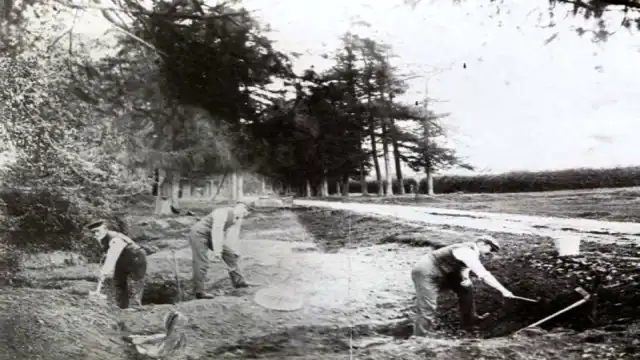
The story begins with Charles Dawson, a Sussex solicitor and amateur fossil hunter. Known locally as the “Wizard of Sussex,” Dawson had a knack for finding things nobody else could.
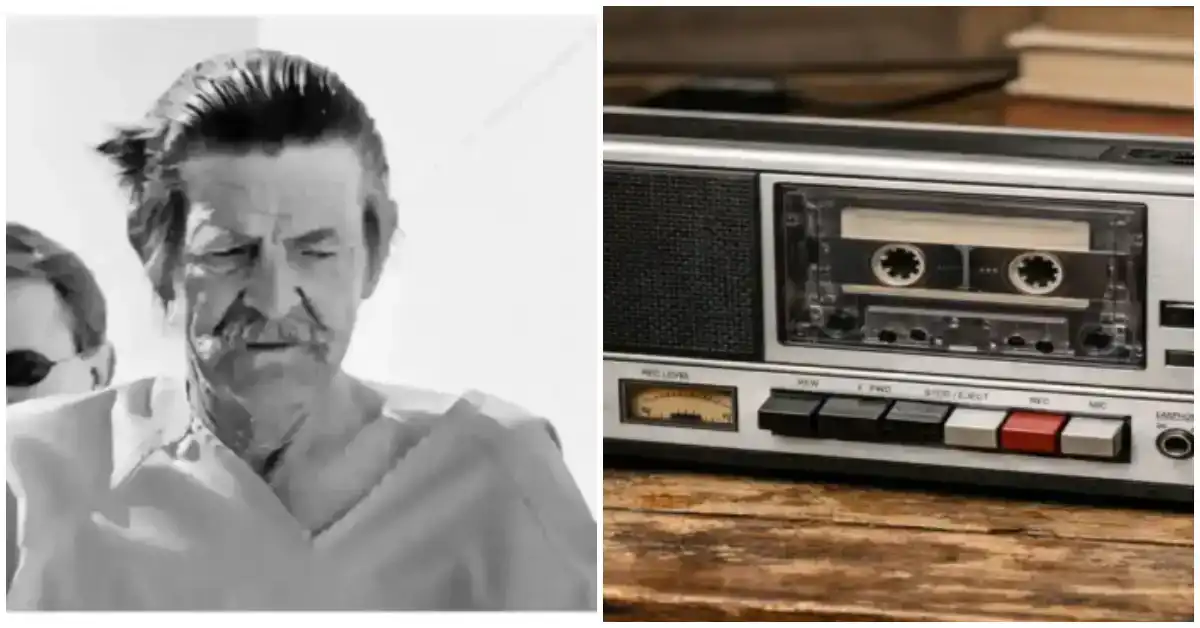
In 1912, he contacted Arthur Smith Woodward, the Keeper of Geology at the prestigious Natural History Museum. Dawson claimed he’d found something “spectacular” in a gravel pit near Piltdown.
When Woodward arrived, they unearthed pieces of a thick human skull, a jawbone, and primitive stone tools.
Why The World Believed It
You might wonder, how could top experts be so gullible? The answer isn’t just bad science; it’s bias.
- Nationalism: British scientists were desperate for an “First Englishman.”
- The “Brain-First” Theory: At the time, experts believed humans evolved big brains before they learned to walk upright. Piltdown Man fitted this theory perfectly.
- Confirmation Bias: Woodward wanted it to be true so badly that he ignored the red flags.
They named it Eoanthropus dawsoni (“Dawson’s Dawn-Man”). The world celebrated. Meanwhile, the real evidence of human evolution—small-brained fossils being found in Africa—was ignored because it didn’t fit the Piltdown narrative.
The Anatomy of a Lie: How They Faked It
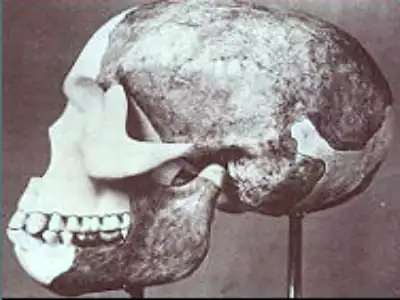
The fraud wasn’t just a prank; it was a masterpiece of forgery. It wasn’t until 1953 four decades later that new technology finally exposed the truth.
Scientists Kenneth Oakley, Joseph Weiner, and Le Gros Clark used fluorine dating to test the bones. The results were shocking. The skull wasn’t 500,000 years old. It was medieval maybe 600 years old.
But the jaw? That was the real kicker.

The Forensic Breakdown
Here is exactly how the forger built the “Missing Link”:
- The Jaw: It didn’t belong to a human ancestor. It belonged to a modern orangutan.
- The Teeth: Ape teeth are pointy; human teeth are flat. The forger had filed the molars down with a metal file to mimic human chewing patterns.
- The Color: The bones were stained with a solution of iron and potassium bichromate to make them look ancient and fossilized.
- The Tools: Even the “cricket bat” (a carved elephant bone found at the site) was cut with a modern steel knife.
It was a medieval human skull glued to a modern ape jaw. Frankenstein, meet Darwin.
The Suspects: Who Was the Mastermind?
This is where the story turns into a real-life mystery novel. Dozens of people have been accused, but three names stand out.
1. Charles Dawson (The “Wizard”)
- The Motive: Ambition. He desperately wanted to be elected to the Royal Society but was seen as just an amateur.
- The Evidence: After he died in 1916, no more fossils were ever found at Piltdown. Recent analyses in 2016 showed that the methods used to stain the bones were consistent across all his “discoveries.”
- The Verdict: He is the prime suspect. Most historians now agree he was the hands-on forger.
2. Sir Arthur Conan Doyle (The Wild Card)
Yes, the man who wrote Sherlock Holmes lived just a few miles from the dig site.
- The Motive: Revenge. Science had mocked his belief in spiritualism (talking to ghosts). Some believe he planted the fake to humiliate the scientists and prove they could be fooled easily.
- The Verdict: Unlikely, but a fantastic theory.
3. Martin Hinton (The Grudge)
Hinton was a volunteer at the museum who hated Arthur Smith Woodward.
- The Evidence: In the 1970s, a trunk belonging to Hinton was found in the museum attic. Inside? Bones stained with the exact same chemicals used in the Piltdown fraud.
- The Verdict: He probably knew about it or perhaps helped Dawson to see his boss look foolish.
The Legacy
You might think this story makes science look bad. Actually, it proves science works.
Science isn’t about being right all the time; it’s about self-correction. The hoax lasted 40 years, which is a long time, but it was scientists who eventually debunked it, not critics.
The exposure of Piltdown cleared the path for the real understanding of human evolution: that we originated in Africa, and that walking upright happened before our brains got big.
Key Takeaways
- Skepticism is healthy: Extraordinary claims require extraordinary evidence.
- Bias is dangerous: Even experts see what they want to see.
- Technology is king: The fraud was undetectable in 1912, but fell apart under the microscope of 1953.
Frequently Asked Questions (FAQ)
Q: Who was responsible for the Piltdown Man hoax?
A: While never 100% proven, evidence points strongly to Charles Dawson, the amateur archaeologist who discovered the bones. A 2016 study found consistent forgery techniques across all his finds.
Q: How long did the Piltdown Man hoax last?
A: It fooled the scientific community for roughly 40 years, from its discovery in 1912 until it was definitively exposed in 1953.
Q: What was the Piltdown Man actually made of?
A: It was a composite of a medieval human skull, a modern orangutan jawbone, and chimpanzee teeth that had been filed down.
Q: Did the British Museum know it was a fake?
A: No. Arthur Smith Woodward, a top scientist at the museum, genuinely believed it was real. He spent the rest of his life digging for more evidence, never knowing he had been conned.
Don’t let history fool you. The next time you see a “groundbreaking discovery” that seems too perfect to be true, remember the orangutan jaw that tricked the world.
Enjoyed this mystery? Share this post with your friends and subscribe for more deep dives into history’s strangest lies!
Sources:
- https://www.nhm.ac.uk/our-science/services/library/collections/piltdown-man.html
- https://en.wikipedia.org/wiki/Piltdown_Man
- https://pmc.ncbi.nlm.nih.gov/articles/PMC5108962/

